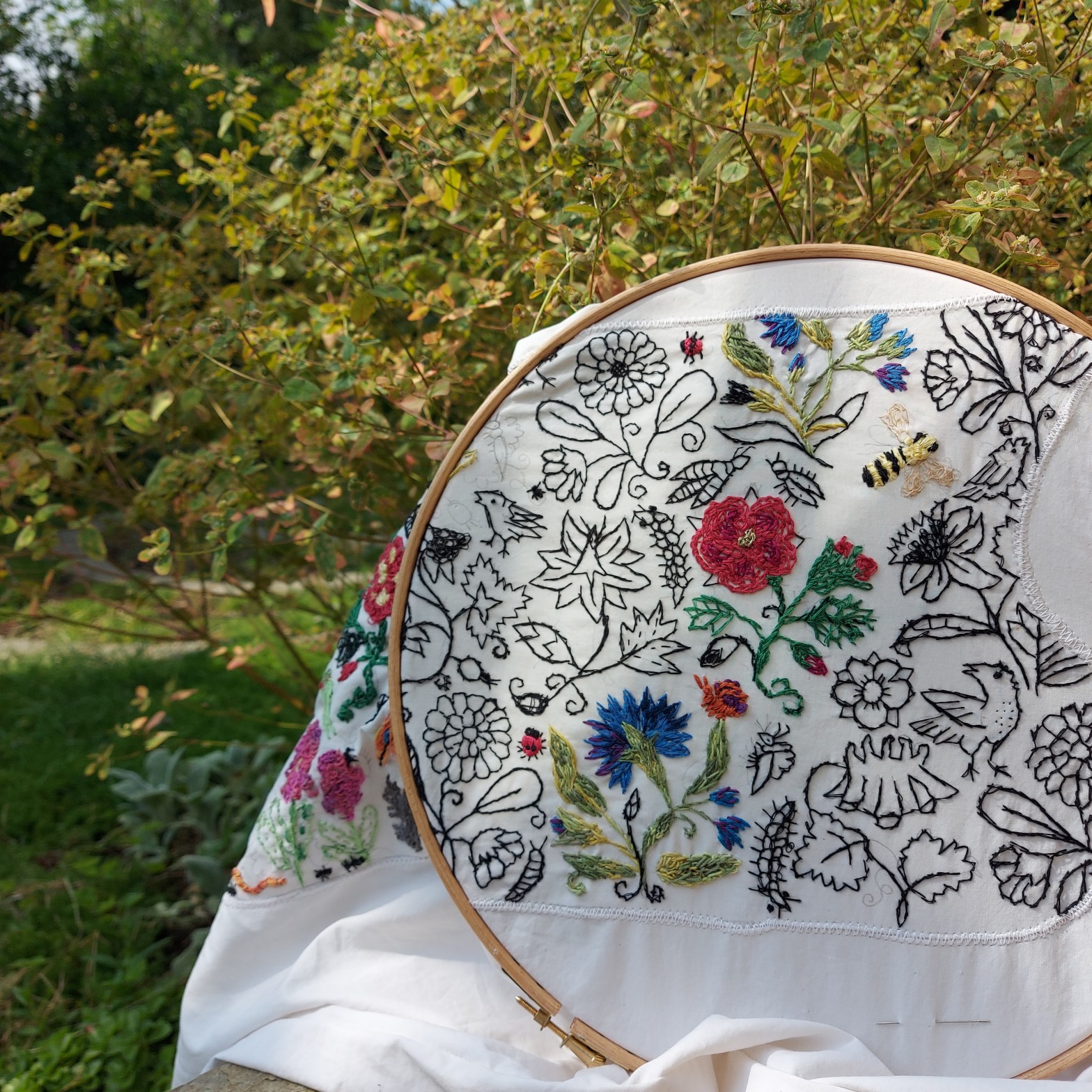
What would you include if you were capturing your garden in a drawing? Would you just focus on flowers, or would you include insects whether you liked them or not? Do you even know what they all are?

Faced with an outline drawing for embroidery from Elizabethan times, I recognised some of the plants and insects immediately. For others I could only guess at what they might be. Which immediately made me wonder how much might have changed. The more I read, the more concerned I felt about the changes to British wildlife due to interventions in farming, industrialisation and climate change. In my lifetime (not to mention the 15 other generations since the coif design was conceived) we have killed, starved, poisoned, ploughed or concreted over 97% of our wildlife meadows and decimated our bird, mammal and insect populations. In fact, the UK is in the bottom 10 of the Biodiversity Intactness Index. It is the lowest of any G7 nation, we are even worse than China. I was horrified.
So, how to stitch this coif? The design no longer represents any reality that I recognise.
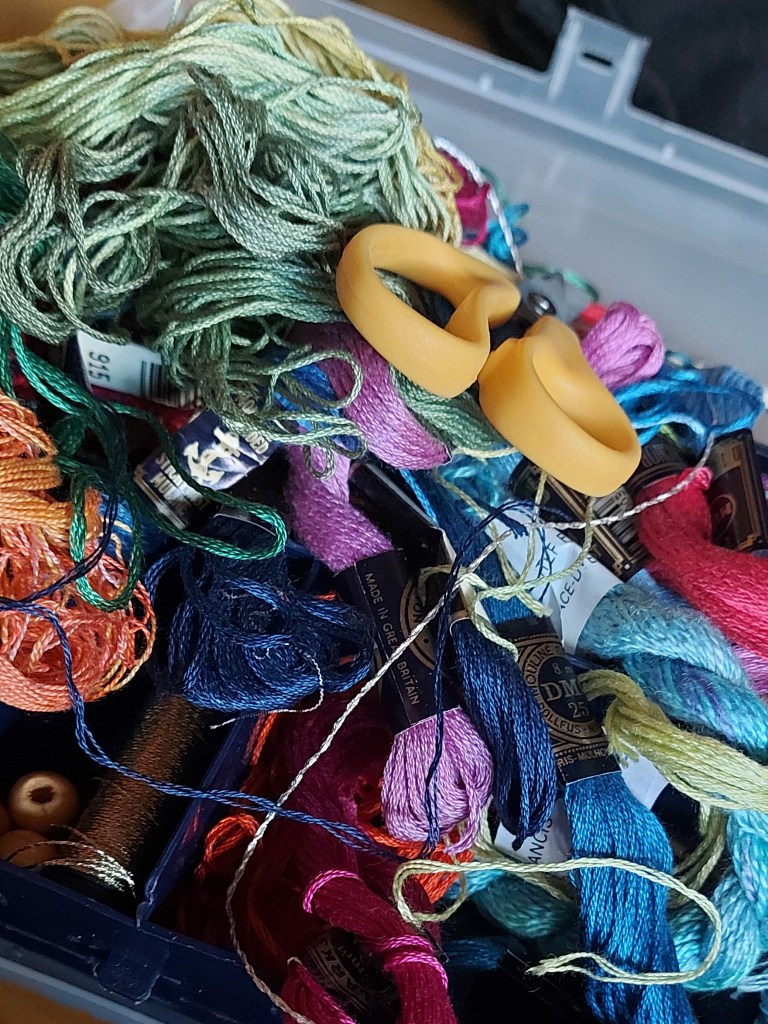
I started with cloth and thread selection. I wasn’t going to add to the world’s problems by choosing to buy new threads or cloth, so I dug out an old pillowcase and an inherited box of threads from family and friends. Then I began to stitch what I still saw in my local area with my limited range of childhood embroidery skills. But it wasn’t long before I wanted to change more of the design. I wanted to reflect the reality of my surroundings and feelings about our countryside, not just colour in a world that was long-gone. To the horror of many of my fellow stitchers, I’ve left the original design in pencil as a ghostly reminder of what was.
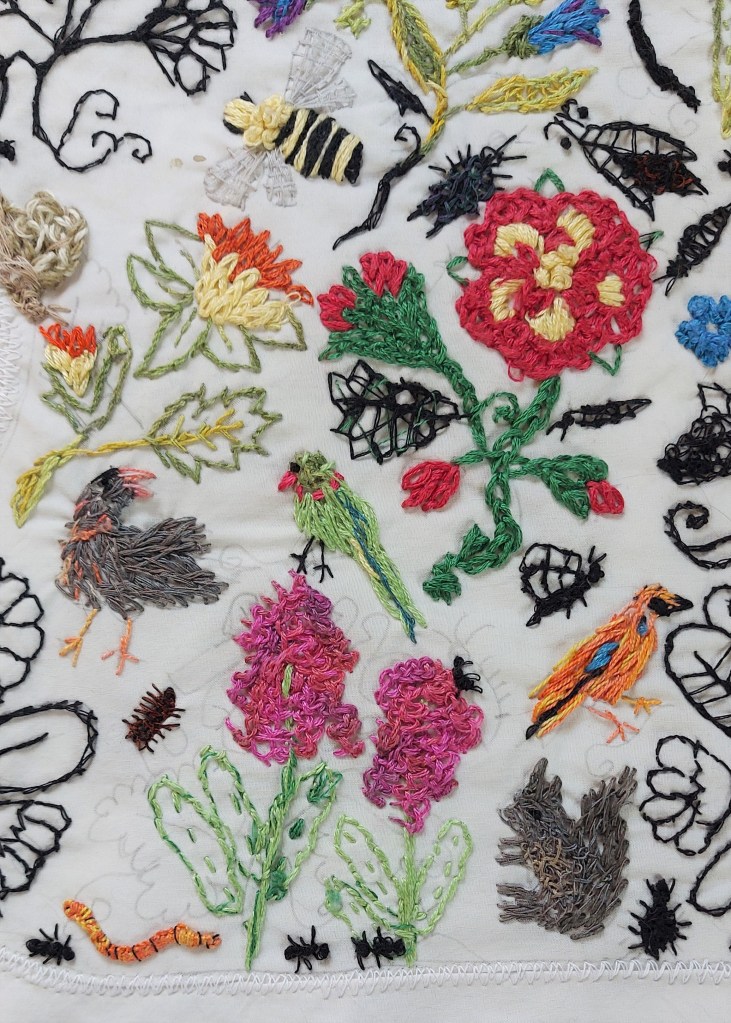
By the end of my stitching I’d added ants, worms, foxgloves, grey squirrels and rats. Besides ring-necked parakeets since they are now a raucous sight in my neighbourhood and are listed as one of our most common birds.
My final decision was to colour in just half of the design to reflect the UK only having 53% of our original biodiversity left[1] and our collective national failure to meet 14 of the 19 remedial targets that we committed to by 2020.
But is it too late to stop the decline? I am heartened by the wildflower meadows springing up on verges, roundabouts, gardens and stately homes thanks to initiatives led by organisations like the Wildlife Trust[2]. After all, you only have to read the Secret Garden or think back to Covid times to realise how much our health and welfare depends on nature. It’s up to us to change our ways, and this project can help.
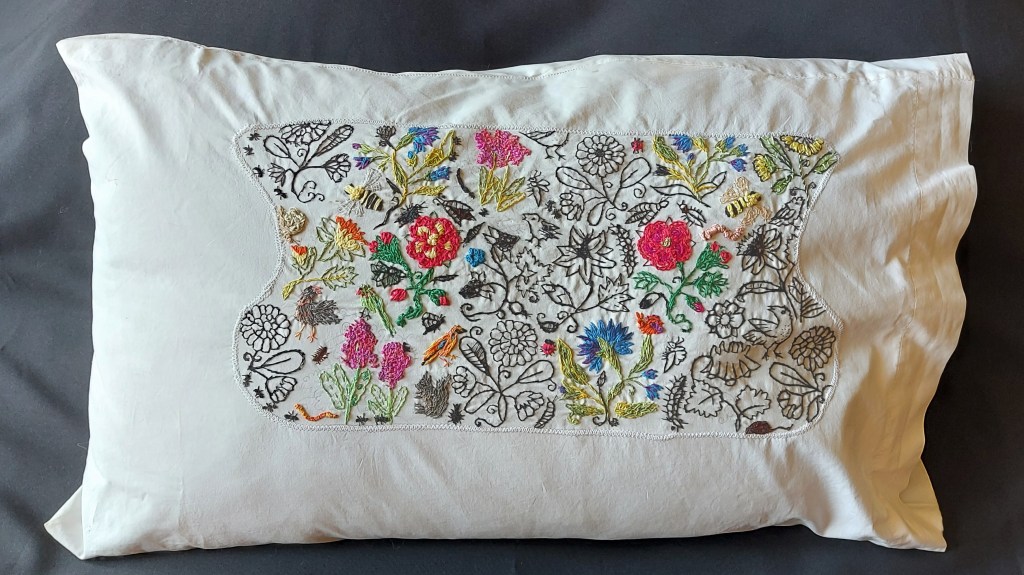
The exhibition of all the coifs will be held a Bloc Projects Gallery in Sheffield from 18th to 24th December 2023. You can read more about the project and the experiences of other stitchers on the project blog site – http://blackworkembroidery.org/unstitched-coif-project-blog/

It’s not too late to change if we all help
[1] https://www.bluepatch.org/biodiversity-loss-in-the-uk/
[2] https://www.wildlifetrusts.org/wildlife/managing-land-wildlife/managing-road-verges-wildlife
 Jen Cable Art