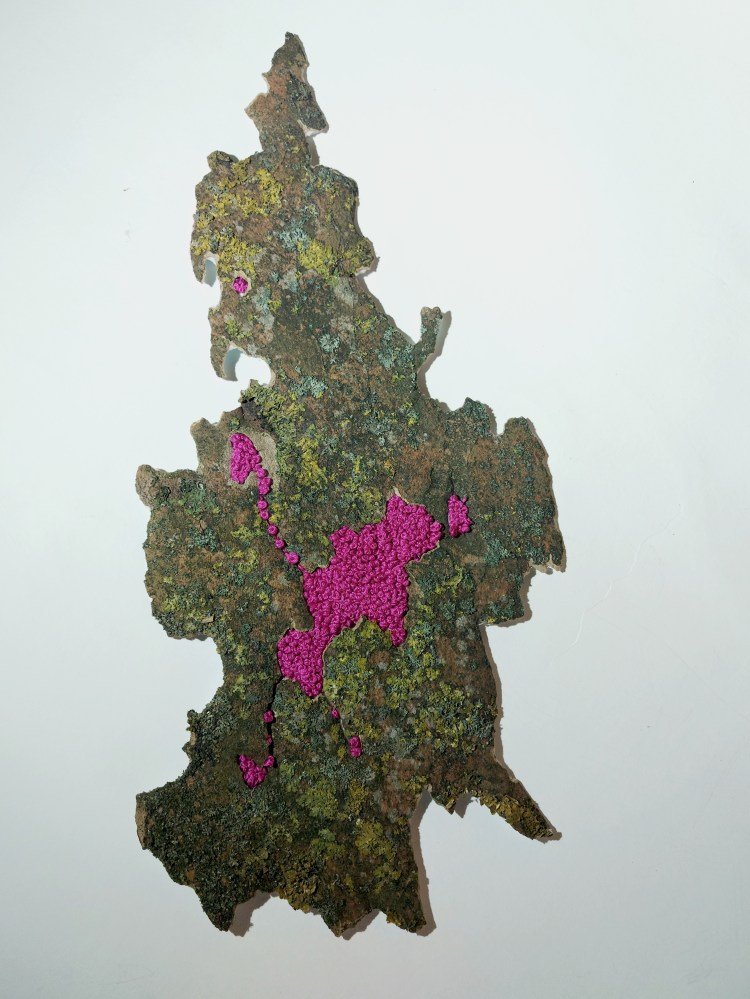
Here in London, we have the world’s largest urban forest, with almost as many trees as people.
London Plane trees have distinctive mottled bark that peels away to shed pollution. Their wide leaves filter dust and absorb carbon, reducing the impact of traffic fumes. In summer they cast cooling shade onto overheated streets, lowering temperatures and making public spaces more bearable. Birds, insects, and small urban wildlife depend on them, turning grey squares into living habitats.
Despite their value, they pass almost unnoticed. Councils see no more than a problem of leaves to clear, roots that lift paving stones and branches that need cutting. Vandals carve into their bark or snap young limbs. Yet somehow they survive, their roots trapped under pavement and tarmac, their soil dry and compacted, surrounded by traffic pollution and London’s crowds.
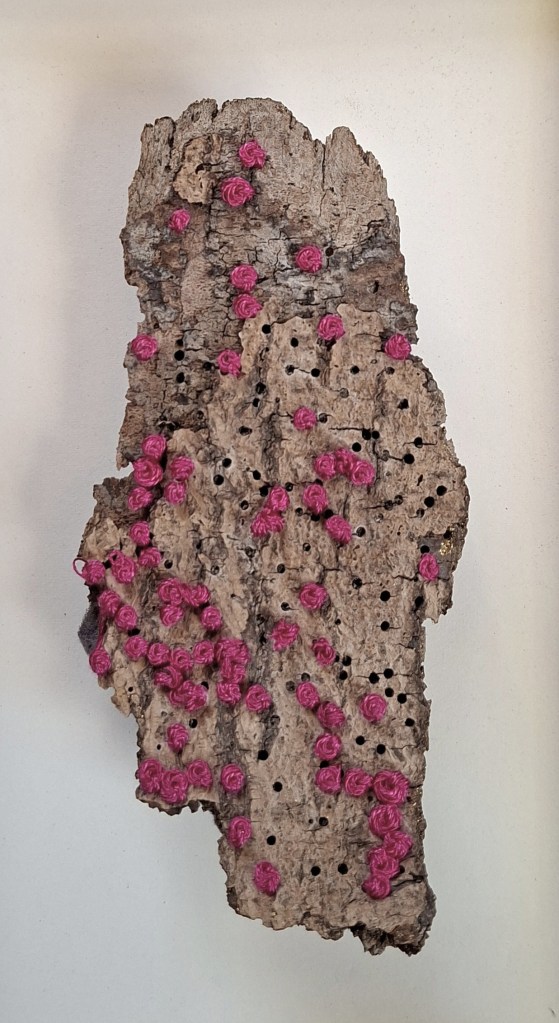


These trees are not decoration; they are infrastructure for wellbeing. Protecting them means protecting a quiet partnership between nature and city life, one that helps urban communities breathe, rest, and endure.
Hand embroidery in silk on London Plane tree bark, stitched by Jen Cable
 Jen Cable Art